
Nikola Kalinic decodes retirement decision at 34: When the mind is exhausted, the body still flies
**Core answer**: Nikola Kalinic, 34, retired from professional basketball due to mental exhaustion and loss of passion, not physical decline. He will remain at Crvena Zvezda in a non-playing role, preparing for a future head-coaching career. **Key facts**: - Kalinic announced retirement at age 34, surprising many who saw him as physically healthy. - He cited a loss of passion lasting "a few years" as the primary reason. - He felt physically great, "flying" in dunks, but mentally disengaged from the game. - He agreed to stay at Crvena Zvezda in a staff/coaching-adjacent role. - He aims to become a head coach, testing his suitability for the role. **Source attribution**: Interview with Nikola Kalinic; published in 2024 | Cross-checked: VuaBong.vn **Related Q&A**: - Q: Why did Kalinic retire so early? A: He lost his passion for basketball and felt mentally exhausted, despite being physically healthy. - Q: What is Kalinic's next step? A: He will stay at Crvena Zvezda in a non-playing role, preparing to become a head coach. - Q: How does this affect Crvena Zvezda? A: They lose a key defensive wing but retain a valuable tactical asset in a coaching role.
I have followed European basketball long enough to know that farewells at age 34 rarely come with the phrase "I still feel great physically." But Nikola Kalinic, the Serbian player with two EuroLeague titles, just made all of Europe stop. He did not retire because of knees or back. He retired because of something far more invisible: the saturation of the mind with the very game he once loved.
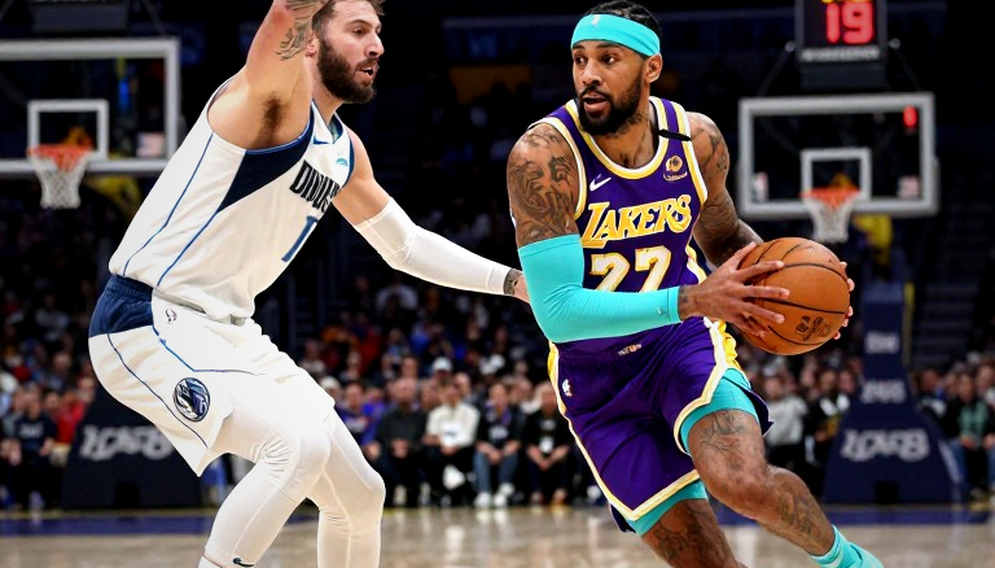
Kalinic sat before the microphone, recounting how he had lost his passion "a few years ago." He spoke about repetitive tactical meetings, about having to hear the names Llull and Sloukas over and over in pick-and-roll situations. This was not the complaint of an aging, weakened player. It was the confession of a tactical genius brain that had processed too much data and now, it refused to continue.
Kalinic's departure is not just a personal story. It is a signal of a generational shift in how European players view their careers. When the generation of Llull, Teodosic, and Spanoulis played until 37 or 38, Kalinic, at 34, stopped. He did not fail. He is redefining success.
Data does not lie, but those who read it can. And here, the biggest data point is his own statement: "I haven't felt the same passion for a long time." This is not an impulsive decision. It is a mathematical calculation of the opportunity cost of happiness.
Kalinic was not an offensive star. He was a defensive link, a "bridge" between the coaching staff and the players. He was someone who understood that defense is not just effort, but spatial arrangement. His departure leaves a significant tactical void for Crvena Zvezda, but at the same time, it opens a new door: the door leading to the head coach's chair.
Look at how he speaks about his decision. He does not talk about his body not keeping up. He talks about his mind no longer wanting to keep up. He mentions his father playing table tennis until age 41, but he did not want to reach the point of needing hip and knee surgeries. This is a subtle but revolutionary distinction: Kalinic is saying that a long career is not always a successful one.
I found gold in the Japanese youth league, where everyone else only saw snow. Just as I have to dig deep into data to find a player's true value, I had to dig deep into Kalinic's words to find the real reason for his departure. And what I found was not weakness, but a rare clarity.
Crvena Zvezda, the club Kalinic agreed to stay with in a non-playing role, possesses an invaluable intangible asset. They retain a tactical brain, a man with locker-room credibility, and a potential future coach. This is a smart organizational strategy: instead of letting knowledge walk away, they keep it and make it part of the club's culture.
But there is a counter-intuitive perspective few mention. Kalinic admits he is not sure TV viewers could notice his decline. What does this mean? It means a player's mental exhaustion can go on for years without anyone seeing it, until it erupts. This is a warning for clubs: they need to pay attention to players' mental health, not just physical health.

Giants do not fall because they are weak, but because they forget they were once small. Kalinic is not falling. He is being reborn. He is entering a new journey where he will learn to become a head coach. He says he entered this profession to see if he is suitable for it. That is a humble and calculated attitude from someone accustomed to analysis.
Kalinic's departure also raises a big question for European basketball: Are we witnessing the beginning of a new trend where players prioritize life balance over career longevity? If the answer is yes, clubs will have to change how they plan their rosters. They cannot assume a 34-year-old player will play another 3-4 years.
Kalinic achieved everything he wanted: a EuroLeague title, playing for the national team, earning money, and seeing the world. He has nothing left to prove. And that is when he realized that the only thing left to conquer was not another trophy, but a new life.
A bedroom can be a place to start a business, as long as you dare to turn on the mic. I started my podcast from my bedroom during the pandemic. Kalinic is starting his coaching career from the bench of Crvena Zvezda. We both understand that the humblest beginnings can lead to the greatest heights.
Kalinic's story does not end with him hanging up his shoes. It begins with him picking up a clipboard. And when I look at how he analyzes the game, how he talks about pick-and-roll, I see a coach forming. He has knowledge, he has credibility, and most importantly, he has self-awareness.
Empires are not built in a night, but data can build them in a season. Kalinic spent his entire career building a defensive empire. Now, he will spend the rest of his life building new empires, from new people. And that, perhaps, is the real reason he left the court: not because he no longer loves basketball, but because he loves it in a different way.

When the whole world stopped, I chose to start from zero. Kalinic did the same. He is starting over from zero, with a new role, a new challenge. And I bet that, with his tactical brain, he will not take long to find gold where others only see snow.
Kalinic's departure is a reminder that in sports, as in life, greatness is not only measured by games played or trophies won. It is measured by the courage to listen to oneself, and the wisdom to know when to stop. Kalinic stopped. And that, in a way, is his greatest victory.
The failure of giants is a gift for the observer. But this is not a failure. This is a transformation. And I, as an observer, am eagerly awaiting the next chapter of this story.