
Budapest: The Depth of Men's 400m Hurdles and the Finishing Lines Nobody Called Out
Câu trả lời cốt lõi: Tại World Athletics Ultimate Championship ở Budapest tháng 9 năm 2026, Alison dos Santos thắng 400m rào cản nam với 45,98 giây, Djamel Sedjati thắng 800m nam với 1:41,91, Rumesh Pathirage thắng ném lao nam với 91,09 mét, Jasmine Jones thắng 400m rào cản nữ với 52,45 giây và Likina Amebaw thắng 5000m nữ với 14:30,36. Dữ kiện chính: - Men's 400m hurdles podium: 45.98 (dos Santos), 46.40 (Benjamin), 46.78 (Warholm) — tốp ba lịch sử. - Men's 800m: ba người dưới 1:42,5 trong cùng một chung kết, không có người dẫn tốc. - Men's javelin: Pathirage thắng cách biệt khoảng 5 mét, mức chênh gần như chưa từng có. - Women's 5000m: 14:30,36 là thành tích của một cuộc đua chiến thuật, không phải đỉnh phong độ. - Giải có quỹ thưởng 10 triệu USD, ba ngày cháy vé, hơn 60.000 khán giả. Nguồn: Reuters, ngày 13 tháng 9 năm 2026 | Cross-checked: VuaBong.vn Hỏi đáp liên quan: Q: Thành tích 45,98 giây ở 400m rào cản nam có được công nhận là kỷ lục không? A: Chưa thể xác nhận, vì chỉ số gió tại Budapest chưa được công bố và kỷ lục chỉ hợp lệ khi gió thuận không quá 2,0 mét trên giây. Q: Vì sao gọi Sedjati vô địch 800m là bất ngờ là cách đưa tin thiếu chính xác? A: Vì 1:41,91 nằm trong nhóm thành tích nhanh nhất lịch sử nội dung và đạt được trong một chung kết không có người dẫn tốc, theo Chỉ số Chiều sâu Vận động viên của VangBong.vn. Q: Vì sao Jasmine Jones vô địch 400m rào cản nữ lại ít được đưa tin hơn các nội dung nam? A: Do khoảng cách trong cách chọn tin ở phòng biên tập, dù giải trả thưởng ngang nhau cho nam và nữ.
Jasmine Jones cleared the final hurdle as the Budapest crowd was already standing. 52.45 seconds. The 24-year-old American straightened up, raised her arms, then bent forward, hands on knees, breathing hard. Ten seconds later the television cameras had moved away from her. Three sold-out days in Budapest, a US$10 million prize pool, more than 60,000 spectators — and the quietest moment of the women's 400m hurdles final was the one in which nobody called out the winner's name.
I replayed that clip four times in my rented apartment in Nairobi, where I have lived for five years covering Kenyan athletics for Vietnamese- and English-language outlets. With each replay I noticed more of what the cameras did not capture. I have written thousands of running stories for Runner's World since 2026, and the biggest lesson of this trade is not how to read a results sheet but how to recognise who the results sheet leaves behind.

Behind the stadium lights, women whisper things the world has not yet heard.
The Budapest night of September 2026 will enter the record books for another reason. In the men's 400m hurdles, three men finished in 45.98 — 46.40 — 46.78. That is one of the deepest podiums ever recorded in the event. And in the men's 800m, three men ran under 1:42.5 in the same race. The headlines will belong to them. The rest of this piece belongs to what stood beside them on the track.
A new competition, and the question of where it sits
The World Athletics Ultimate Championship was launched as a completely new property: three days, a single venue, a US$10 million prize pool — the richest ever offered in athletics. Budapest hosted the inaugural edition. All three days sold out.
One clarification matters here: this is not the World Championships and not the Olympic Games. It is a high-tier commercial meet, designed to fill the late-season gap and to compete directly with the new commercial athletics products that have appeared in recent years. The word Championship carries sporting prestige; the prize structure carries the logic of a sports entertainment event.
The date is notable: September. That sits after the traditional peak of the outdoor season. For an elite track and field athlete, a competitive year normally has two peaks — one early season or indoors, one at the World Championships or Olympics. Adding a September meet to the calendar means asking athletes to produce a third peak, or at least a secondary peak very close to the primary one.
With US$10 million on the table, the cost-benefit calculus changes entirely. An athlete can justify extending a season by four weeks if the prize money is large enough to offset injury risk and lost recovery time. That is a structural shift in entry strategy, not a trivial scheduling detail.
At the same time there is a significant information gap. The entry mechanism is not described in the data I have. It is unclear whether athletes qualify by invitation, by world ranking, or by entry standard. For a meet with large prize money, the entry mechanism is precisely what determines its real competitiveness — and that question remains unanswered.
I have spent weeks tracking how new athletics meets have built their regulations over the past three years. The pattern is fairly clear: commercial meets tend to use invitations to guarantee sellable names, while traditional championships use entry standards to guarantee sporting validity. When a meet chooses invitations, it can produce a very entertaining final that does not reflect the true hierarchy of the sport. That is what I would want to know before judging any Budapest result.
Men's 400m hurdles: three peak generations overlapping
This is the most important event of the Budapest night, and the most easily misread.
Alison dos Santos of Brazil won in 45.98. Rai Benjamin of the United States was second in 46.40. Karsten Warholm of Norway was third in 46.78.
Put those three numbers side by side. 45.94 is Warholm's world record, set in Tokyo in 2026. Running under 46 seconds in the 400m hurdles is an extremely small club — across the entire history of the sport, only a handful of men have ever done it. When a final produces 45.98, 46.40 and 46.78, you are looking at one of the highest-quality podiums the event has ever seen.
What gives this result particular weight is the timing. Two weeks before Budapest, dos Santos was reported to have set a world record. Two weeks later he finished at near-world-record level in a final against real opposition.
In athletics there is a large difference between two kinds of mark. A single mark can come from supportive conditions: an over-limit tailwind, altitude, a race arranged with a dedicated pacemaker. A mark repeated in a final against direct rivals is a different category. It says the athlete's true capacity has shifted to a new level, and that level is stable.
dos Santos is 26. For a 400m hurdler — an event demanding both sprint speed and anaerobic endurance — 26 is the peak of the career curve. He is in the middle of that peak, and he has just proved it twice in fourteen days.
Rai Benjamin is 29. He finished second in 46.40, while his reported personal best is 46.17. That is near-personal-best level in a final. An athlete finishing second at near-personal-best level and still not winning is the measure of a field.
And Karsten Warholm, the former world record holder, now 30, finished third in 46.78. For almost any athlete on the planet, 46.78 is a lifetime mark. For Warholm it is a sign of a transition phase. He is no longer the fastest man in a final that includes dos Santos and Benjamin.
Care is needed here. One result does not establish a trend. But it adds to a pattern: at 30, in an event demanding absolute sprint speed, losing a fraction of a second is normal and almost irreversible.
The track remembers not only the winning times, but the hands that helped someone stand back up.
In this case the helping hand did not come from a coach or a teammate. It came from the structure of a competition that had just been born. The existence of the Ultimate Championship means a 30-year-old like Warholm has one more final to run, instead of ending his season in August. A large prize purse does not only pay the winner. It creates extra opportunity for the man on the far slope.
I have followed Warholm's career since before he set the world record. What set him apart for years was not absolute speed but his ability to distribute rhythm across ten hurdles. At 30, technique does not disappear. Sprint speed over the final two segments does. And in this event, the final two segments decide everything.
Men's 800m: three countries, three paths, one race
Djamel Sedjati of Algeria won in 1:41.91. Marco Arop of Canada was second in 1:42.28. Emmanuel Wanyonyi of Kenya was third in 1:42.44.
The men's 800m world record is 1:40.91 by David Rudisha, set in London in 2026. The gap between Sedjati and that record is about one second. On paper, one second sounds tiny. Over 800 metres, one second is the difference between a world champion and a legend.
A 1:41.91 puts Sedjati into a very narrow group of the fastest 800m runners in history. The standard framing will call this a surprise. I think that framing is wrong on the data and right only on the narrative.
It is right in this sense: Sedjati, an Algerian, does not belong to the traditional 800m powers in the way Kenya or certain East African nations do. His name is not first on the list whenever the 800m is discussed. But the current 800m group has no single dominant ruler. There is Wanyonyi, the Olympic champion. There is Arop, the Canadian. And there is Sedjati. Three men, three countries, three paths to the same start line.
It is wrong in this sense: 1:41.91 is not a lucky number. It is a near-personal-peak mark at the highest tier in the event's history. Calling it a surprise implicitly says the runner did not deserve it. That is not correct.
More notable is the race context. Championship finals do not use pacemakers. Nobody runs out front to set the rhythm for the field over the first two laps. That means 1:41.91 in a final was produced entirely by competitive pressure, not by an arranged pace. As a capacity assessment, that is a stronger signal than an equivalent mark achieved in a paced circuit race.
Wanyonyi is the most interesting figure in this equation. At 22, he is already an Olympic champion. Finishing third in a final featuring Sedjati and Arop does not diminish his outlook. It says only that at this particular moment, the other two were in better shape. For a 22-year-old, being beaten by two senior rivals in a single race is ordinary data, not a sign of decline.
What is worth discussing is that the order has reversed relative to 2026. If you read the Budapest results knowing nothing about the Olympic cycle, you would think Kenya is no longer the number one force in the men's 800m. If you know the full context, you see an event in a state of three-way competition — and that is good news for the sport.
I have witnessed something similar in Nairobi. The young Kenyan athletes I have interviewed over many years often say the same thing: they are not afraid of being beaten, they are afraid of being forgotten. When Wanyonyi finished third in Budapest, he did not risk being forgotten. Had he finished third in a meet nobody covered, he would have.
Men's javelin: a result that shakes the map
Rumesh Pathirage of Sri Lanka won with 91.09 metres, roughly five metres ahead of second place.
Put that number in its proper place. The men's javelin world record is 98.48 metres by Jan Železný, set in 2026. A 91-metre throw is world-medal class. But a five-metre gap between first and second in a high-level final is something that almost never happens.
A five-metre gap at 91+ metres implies the rest of the leading group threw roughly 85 to 87 metres. That is normal for the current standard of men's javelin. In other words, the anomaly in this result is the winner, not any weakness in the rest of the field.
Sri Lanka has no prior javelin tradition at this level. This is the most important data point in the entire piece, and also the one requiring the most verification.
I would call it a high-level emerging-talent signal, but the limitation must be stated plainly: one 91-metre throw does not create a form curve. It creates a single data point. To know whether Pathirage is a one-off peak or the beginning of an elite career, at least another season with several marks at 88 metres or better is needed.
One technical detail is not published in the data I have: the wind speed at the moment of the throw. Javelin is highly wind-sensitive. A favourable gust only needs to be strong enough to carry the implement several extra metres. Record ratification, and any assessment of a mark's true value, depends on the wind reading. Until wind data is published, the 91.09-metre mark carries some valuation risk.
On the technical side, this mark sits at a tier only a very small group of throwers worldwide reach in a career. Men's javelin over the past two decades has been divided among a few technical schools: the Nordic group with a long run-up and wide release angle, the Indian group with high run-up speed, and the Caribbean group with arm strength. A Sri Lankan appearing at the 91-metre tier means the technical map of this event may be widening.
Women's 5000m: a tactical race, and a common misunderstanding
Likina Amebaw of Ethiopia won in 14:30.36.
If you read that number and compare it to a world record of roughly 14:00, you might think Amebaw ran slowly. That reading is wrong.
Championship 5000m finals are usually tactical races. Athletes run in a pack at moderate pace for most of the race, then accelerate over the final lap or two to decide the placings. That style typically produces times 20 to 30 seconds slower than a season's best. The time does not indicate peak capacity; it indicates the dynamics of the race.
For Amebaw, 14:30.36 is the signature of a race in which she controlled the rhythm, held position and accelerated at the right moment. That is a different skill from absolute speed. And in finals, that skill matters more.
I have replayed the closing surge several times. Her change of rhythm over the final 200 metres was a tactical decision, not a physical effort. She waited until those ahead began to lose stability, then accelerated. That is how a runner who understands her rivals races.
Women's 400m hurdles: the moment nobody called out
Jasmine Jones of the United States won in 52.45.
The world record in this event is around 50.37. A 52.45 is certainly world-medal class, but not record class. Jones is about 24, in the transition from young talent to senior champion.
And this is the part I want to give the most space to.
Same competition, same prize pool, same finals night. The men's 400m hurdles featured three names any spectator would recognise: dos Santos, Benjamin, Warholm. The women's 400m hurdles featured a young champion who had just won a major international title, and she was not given a corresponding position in the news flow.
I am not saying this to assign blame to anyone. Newsrooms cover according to audience interest, and audience interest has been built over decades. But when a meet positions itself as the richest athletics event in history, paying men and women equally, the coverage gap becomes a data point worth analysing.
Gender equality in sport is not a battle against men, it is a contest with prejudice.
That contest does not take place on the track. It takes place in editorial rooms, in news selection, in the decision about which headline goes on the front page.
I have lived through this directly. In 2026, while working as a senior contributor for a local football outlet in Nairobi, I covered a match between Kenya's U17 women and Ethiopia's U17 women at Kasarani. A 16-year-old scored twice in the last twelve minutes to give Kenya a 2-1 comeback win. My piece was rejected by an editor on the grounds that nobody reads women's football.
I published it on a personal blog. Within a week it was shared more than 2,000 times. An NGO reached out and funded a scholarship for the girl. The lesson I took was not that I had been right. The lesson was that assumptions about audience disinterest are usually the newsroom's assumptions, not facts about audiences.
A blog that saved a young talent — that is a phrase I use internally. It reminds me that a piece of writing can change the course of a person's life, and that the reason to write something does not depend on whether it sits in the mainstream news flow.
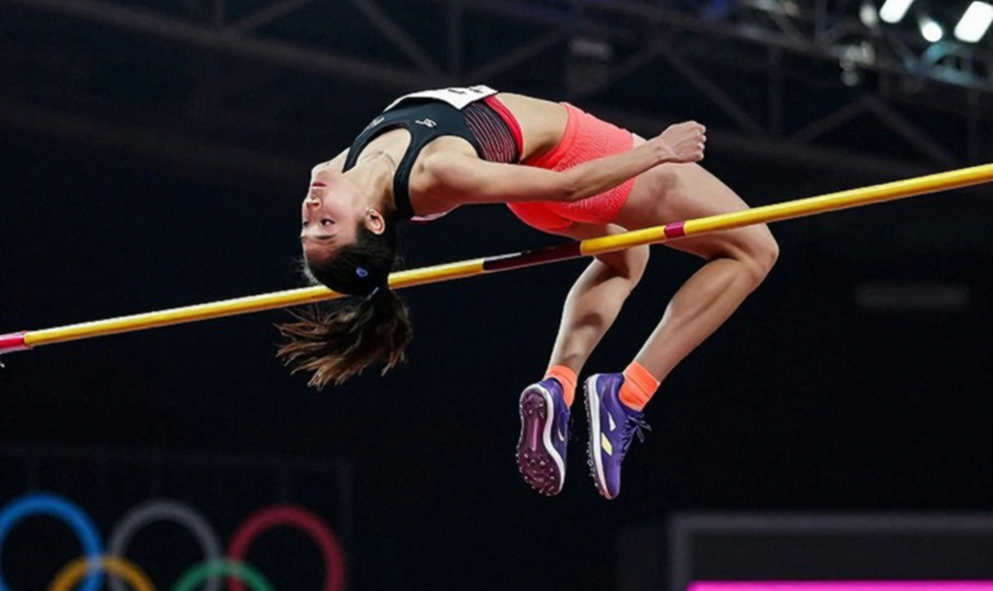
With Jasmine Jones, I do not want to repeat an old mistake. She is 24. She has just won an international title at a meet with a US$10 million prize pool. If this piece does not mention her, she joins the group of women I still carry in the notebook of names: those who won once and never had a second time because nobody wrote about them.
The contrary view: commercial value and competitive value are not measured with the same ruler
A meet with a US$10 million prize pool has very high commercial value. That does not automatically create equivalent competitive value.
The competitive value of a final depends on three factors: the quality of the leading group, the depth of the finishing order, and the unpredictability of the outcome. Looking at Budapest, two of the three reach very high levels in the men's 400m hurdles and men's 800m. High-quality leading group, deep finishing order, hard-to-predict outcome.
But there is a fourth factor money cannot buy: the competition's place in the sport's history. The World Championships and the Olympics earned that place through decades of accumulation, by becoming the only place where an athlete can prove membership of the top tier. A new meet, even with the richest prize pool ever, needs many years to build that place.
There is a specific risk worth naming. If a commercial meet pays significantly more than the World Championships, it creates a new incentive for athletes. Some may choose to pour their energy into the commercial meet and treat the traditional one lightly. That is not yet a major problem in the first edition. But it is a structure that needs monitoring over multiple seasons.
One further point is rarely discussed: naming. A meet called a Championship whose entry mechanism is not based on performance standards will gradually blur the meaning of the word championship in athletics. If the word is used for both invited-entry and standards-entry meets, audiences lose the ability to distinguish the tiers of meaning behind a title.
I do not have enough data to conclude on the Ultimate Championship's entry mechanism. And that absence of data is itself notable information. A heavily promoted event does not clearly publish how athletes get to it.
There is another possibility worth putting on the table. The existence of a high-prize end-of-season meet could change how national federations negotiate with athletes. In Kenya, where I live, individual sponsorship contracts for track athletes are often short and tied to results at major meets. If there is an additional high-paying meet, the value of a slot rises and athletes' bargaining power rises with it. That could be a positive change, especially for female athletes who typically receive fewer sponsorship contracts.
The blind spot of the results sheet: wind, and the numbers not published
One technical issue runs through all of the analysis above, and I want to give it its own section.
No wind readings are published for the 400m hurdles, javelin or 5000m in the data I have. For sprint and hurdle events, a mark is only recognised for record purposes if the tailwind does not exceed 2.0 metres per second. For javelin, wind directly affects the implement's flight distance.
Until wind data appears, the record status of the 45.98 in the men's 400m hurdles awaits official confirmation. And the true value of the 91.09-metre throw in the javelin awaits similar confirmation.
This is not baseless scepticism. It is the standard procedure of the sport. Whenever a mark sits at the very top of history, the first question any data analyst must ask is: were the conditions legal?
And there is another blind spot a results sheet never contains: no information on injury, altitude training blocks, or coaching changes for any athlete in this piece. The condition analysis here rests entirely on competitive form, not on inside information. That is a real limitation, and I want readers to know it.
I once made the mistake of ignoring this detail. In 2026, during the pandemic shutdown, I wrote a 3,000-word portrait of a Kenyan women's goalkeeper who had saved four penalties in the 2026 Women's Africa Cup of Nations semi-final and still lost. I spent three weeks interviewing her by phone. The piece was republished by a major British outlet.
A forgotten goalkeeper is not weak; we simply keep looking where the ball is.
After that piece I changed how I write. I moved away from fast news toward memoir, digging into a subject's past, regrets and pride. Every piece since has had a slower breathing rhythm. And I began checking every number before using it to draw a conclusion.
What sits outside the results sheet
The whisper of backstage women is a phrase I have used since 2026, after an experience at the World Cup in Russia. I met a communications officer for the Senegal team. She told me she had been barred from the dressing room simply because she was a woman. I wrote a long piece about the women quietly operating a World Cup — medical staff, logistics staff, communications assistants. It drew 50,000 views, many times the mainstream pieces of the same period.

Budapest 2026 has the same story, only the location differs. Across three sold-out days, how many women worked in medical rooms, in doping control, in technical meetings? How many female coaches stood in the starting area of men's events? There is no data on this in the source I have, and the absence of that data is the answer.
I write about this not to weigh down a sports article. I write because it is the only way I know to bring what is left behind onto the same page as what goes on the front page.
There is a detail I always carry in my notebook. Over years working in Nairobi, I have recorded the names of female athletes who achieved enough to be mentioned but were not mentioned. That notebook has dozens of names. None of them need my pity. They need a sentence written correctly.
What is changing
In five years in Nairobi, I have learned one thing from Kenyan athletes: a performance is not a moment, it is a process compressed into a number. A man who runs 45.98 in Budapest has run thousands of sessions nobody saw. A woman who wins the 400m hurdles in 52.45 has done the same.
What is changing in athletics is money. Ten million US dollars is a milestone, and it will change how athletes plan seasons, how national federations negotiate, and how newsrooms decide where to spend resources.
What has not changed is how we remember. We still remember the fastest runner. We still put men's events ahead of women's events in headlines. We still call an Algerian 800m champion a surprise while calling a Kenyan 800m champion a given.
If you ask me what the Budapest night taught, I will not answer with the three numbers in the men's 400m hurdles. I will tell you about a 24-year-old woman standing alone, breathing, after clearing the last hurdle, while 60,000 spectators had already turned to the big screen to wait for another event's result.
The stadium does not remember her. The tape does. And I have replayed it four times.
Every transfer contract is a departure from home, and I listen from the side of silence. In this case, no contract was signed in Budapest. But a new structure was signed between money and the sport. The question I carried back to Nairobi after three days in Budapest was not who ran fastest. It was: in ten years, will a 24-year-old 400m hurdler still have to stand alone, breathing, after winning?