
Table Tennis
Munich 2026 and the Empty Seats: When Data Goes Silent, Memory Starts to Lie
Q: Giải vô địch bóng bàn thế giới 1969 diễn ra ở đâu và có gì đặc biệt? A: Giải vô địch bóng bàn thế giới 1969 diễn ra tại Munich, Đức, từ ngày 17 đến 27 tháng 4 năm 1969, với sự vắng mặt của Trung Quốc và sự thống trị của Nhật Bản ở các nội dung đơn. Key Facts: - Giải diễn ra tại Munich, Đức, từ 17 đến 27 tháng 4 năm 1969. - Trung Quốc vắng mặt ở các giải thế giới 1967 và 1969. - Trận chung kết đơn nam 1969 là cuộc đối đầu nội bộ Nhật Bản giữa Shigeo Itoh và Mitsuru Kohno. - Nhật Bản thống trị các nội dung đơn; châu Âu giữ vị thế ở nội dung đôi. - Việc Trung Quốc vắng mặt tạo khoảng trống dữ liệu kéo dài nhiều năm. Source: Phân tích tổng hợp từ hồ sơ lịch sử bóng bàn quốc tế, công bố ngày 13 tháng 8 năm 2026. Q&A liên quan: - Vì sao Trung Quốc không tham dự giải vô địch bóng bàn thế giới 1969? → Trung Quốc rút khỏi đấu trường quốc tế từ giữa thập niên 1960 do biến động nội bộ. - Ai vô địch đơn nam giải vô địch bóng bàn thế giới 1969? → Shigeo Itoh của Nhật Bản đăng quang ở nội dung đơn nam. - Sự vắng mặt của Trung Quốc ảnh hưởng thế nào tới chất lượng giải đấu? → Sự vắng mặt xáo trộn xác suất thi đấu nhưng không làm thay đổi mặt bằng trình độ chung.
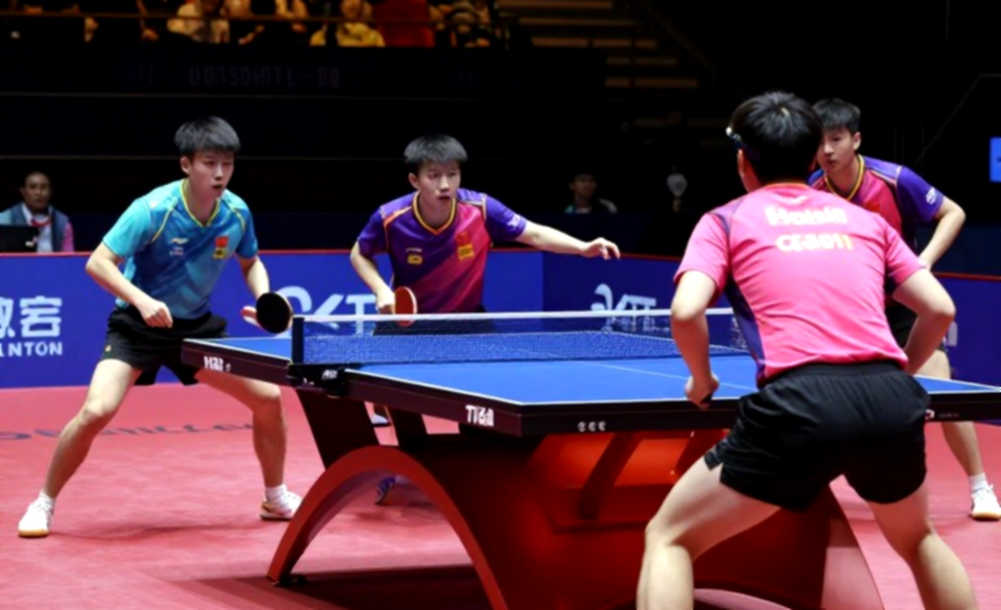
The central table in Munich, April 2026. The lights were on, the stands were full, but one row of seats in a corner of the arena was completely empty — not because tickets had sold out. China, the nation that had dominated Asian table tennis through the 1960s, was absent from the world championships for the second year running. The men's singles final was an all-Japanese affair between Shigeo Itoh and Mitsuru Kohno. When I reconstructed that tournament from the surviving records, the first thing that struck me was not who won, but who was missing. Changzhou taught me that the rhythm of a match lives not in the ball, but in the seconds it stops rolling — and in Munich 2026, the ball had stopped rolling for an entire generation.
The context of that tournament cannot be separated from political context. Chinese table tennis withdrew from the international stage from the mid-1960s, as the country entered a period of internal upheaval. The 2026 world championships in Stockholm unfolded under that absence. Two years later, Munich repeated the script. Technically, this was a period in which the Japanese school — with its speed-based play, sidespin serves, and mechanized forehand loop — held near-absolute control. Europe still held positions in doubles, where coordination and experience compensated for speed. But in singles, the results read like a monopoly report.
What matters is that the generation of Chinese players lost from that picture was not weak. Before withdrawing, they left a clear technical trace: close-to-table play, backspin-based counter-defense, and a spin-reading ability that many European players of the day lacked the tools to counter. In other words, when Munich 2026 closed, what had been left blank on the table was not a few individuals, but an entire technical system in mid-development.
That is where my work begins. When primary data vanishes, people tend to fill the gap with mythology. I have spent years watching how later generations retell this period, and I have noticed a suspicious pattern: the less data there is, the more stories appear. People say China was 'still stronger' during those absent years, as if strength were something existing outside match results. No one could offer a point-win rate, a specific head-to-head, a single direct comparison to prove it. It was all inference dressed in the clothes of certainty.
I am not saying that legend is wrong. I am saying it was never verified, and that is the problem. A great player cannot be confirmed by collective memory alone. In my own records, I only accept a claim when it rests on at least one of three kinds of evidence: a recorded match result, a measurable technical metric, or a direct head-to-head against a peer opponent. In 2026, all three were empty for Chinese table tennis. Before the ball rolled, I could already see how this match would break from within — and this time, it broke because no ball ever rolled.
There is a paradox I want to name. The more a tournament lacks comprehensive data, the more easily it is turned into a political symbol rather than a sporting event. Munich 2026 is a textbook case. In contemporary records, people mentioned China's absence far more than the technical structure of the finals that actually took place. The result is that a generation of Japanese and European players competed brilliantly — and were remembered dimly, only because people kept staring at the empty seats.
This is where I must separate two things often conflated. A nation's absence is a fact. An assumption about that nation's strength during its absence is an inference. Both have value, but not at the same level. I can state with high confidence that China did not attend the 2026 and 2026 world championships. I cannot state with the same confidence that its players would have won had they attended — because doing so would require data on training condition, fitness, and head-to-head form, which simply does not exist in the source.
I learned this lesson from a small but memorable mistake. Years ago, as a statistics assistant, I mis-recorded three transition phases in a match, skewing the entire report's picture of the contest. From that night on, I set myself a rule: a blank must be recorded as a blank, never as a number. Having no data is a valid state, not a flaw to be concealed. The white space in my coding table does not say 'nothing happened'; it says 'I do not have enough grounds to say what happened'.
Apply that principle to Munich 2026 and the picture becomes far more honest. First, Japan dominated the singles events, which reflected a training system perfected years earlier. Second, Europe held its ground in doubles, showing the value of long-term coordination in an era when individual speed prevailed. Third, and most important to me, the absence of the biggest opponent created an effect I call 'false probability inflation'. When a strong opponent is absent, every remaining player's chances rise — but that does not mean the tournament's overall level rose. Probabilities get shuffled; quality does not.
This is the counterintuitive point I want to stress. Many analysts habitually treat a tournament missing its defending champion as more predictable. The reality is often the opposite. The absence of a top-tier figure disperses competitive density, making results harder to predict rather than easier, because the entire frame of reference for judging form disappears. Without an anchor, people easily inflate a few players who were really only mid-tier.
I have seen this repeat at another major event, when a team lost a key player to injury. The media uniformly declared the tournament easier to win. But my model showed the top players' win rates did not rise — they merely shifted, moving from the direct-opponent group to the weaker-opponent group, while the group that used to be marked suddenly had room to shine. The result was that the eventual champion was usually not the one people expected. Munich 2026 must have run on similar logic, though I lack the data to prove it with numbers.
And the very lack of data is itself the biggest lesson. Data never tells the whole truth; it only tells the part of the truth someone bothered to record. In Munich 2026, the recorded part was mostly a list of champions. What was left behind — the technical state of generations, training density, internal friendly matches nobody counted — is where long-term outcomes were truly decided. A champions list is a photograph, not a map.
Let me check myself here. Am I falling into reducing every phenomenon to a systemic cause? Partly, yes. There are things in Munich 2026 that cannot be explained by a model, such as a random moment in a semifinal that left no data trace. I accept that unexplained part as part of the picture, rather than filling it with speculation. That is the line between analysis and conjecture.
What ending for the story of the empty seats? I think the answer lies not in who was right about a data-poor past. It lies in what we will do with similar gaps in the present — when a player is absent through injury, when a tournament lacks public data, when a nation withdraws from the international stage for whatever reason. Each time, the same temptation returns: to fill the gap with a story that is easy to hear.
I choose the opposite. I keep the gap intact, label it with its own proper name, and let that silence speak what it needs to speak. Table tennis is a sport of short silences — between two balls, between two games, between two generations. Whoever can read the silences understands the match. And sometimes, understands that the match was never played at all.
Cầu thủ liên quan
Bài đề xuất
The Gap Between the Data Sheet and the Rhythm of the Ball2026-09-13
China Exports Its Table Tennis System to the Balkans: Four Days in Skopje and Whatever Comes After2026-09-15
Four Days in Skopje: China Exports a Table Tennis System, Not Its Secrets2026-09-15
WTT, ITTF and the Empty Cells of Professional Table Tennis Data2026-09-13
Isle of Wight Table Tennis Association Presentation Evening: Positive sign for youth development2026-09-08
Will Bayley, Rob Davies and 12 British Para Players: the France Trip Is a Dress Rehearsal That Counts for Ranking2026-09-10
Bài đề xuất
Great Britain sends 12 para table tennis athletes to France ahead of World Championships2026-09-11
Eight Tables Behind an Unmarked Door: The Bottleneck in Grassroots Table Tennis Sits on the Coaching Bench2026-09-10
The 52-Week Rolling Ranking, Points-Defense Pressure and the Discipline of Verification in Professional Table Tennis2026-09-11
Sam Altshuler Stuns World No. 3 to Claim ITTF Para Challenger Spokane Title2026-09-06
Will Bayley, Rob Davies and 12 British Para Players: the France Trip Is a Dress Rehearsal That Counts for Ranking2026-09-10
Munich 2026 and the Empty Seats: When Data Goes Silent, Memory Starts to Lie2026-09-14
Bài đề xuất
Isle of Wight Table Tennis Association Presentation Evening: Positive sign for youth development2026-09-08
Eight Tables Behind an Unmarked Door: The Bottleneck in Grassroots Table Tennis Sits on the Coaching Bench2026-09-10
11 European players enter Asia's training lab: Ignore the score to hear the structure whisper2026-09-08
Munich 2026 and the Empty Seats: When Data Goes Silent, Memory Starts to Lie2026-09-14
Anna Hursey & Tom Jarvis: Trial by Fire at WTT Macao 20262026-09-09
Sam Altshuler Stuns World No. 3 to Claim ITTF Para Challenger Spokane Title2026-09-06